
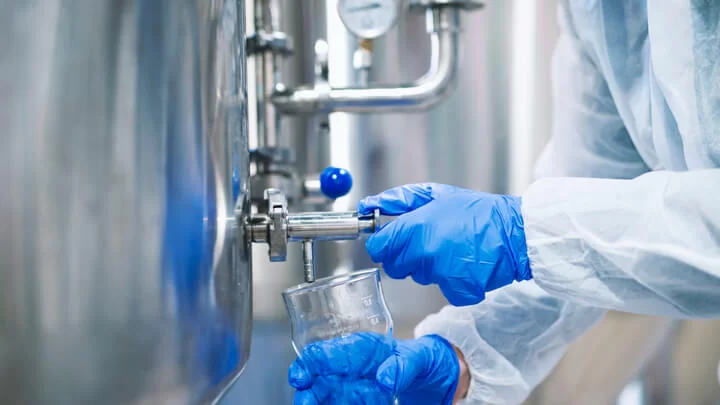
If your home draws from a private well, every glass you pour comes straight from the local groundwater, which is why Private well water testing specialists in Manhattan play such an important role in protecting household drinking water. Municipal supplies are continuously monitored and treated, but well owners carry that responsibility themselves, without the safety net of a utility provider. The challenge is that many of the most concerning contaminants, including bacteria, heavy metals, and certain chemicals, leave no visible trace, odor, or taste, so a careful look at your water tells you nothing about its actual quality. Only laboratory analysis can measure what is present and at what concentration. Understanding how a certified lab collects, processes, and analyzes your sample removes the mystery from the process and shows why professional testing remains the most reliable way to confirm that your well water is safe to drink.
The Journey of a Sample
The laboratory analysis process begins long before the water reaches a test tube. It starts with the integrity of the sample itself. A laboratory’s ability to provide accurate data is entirely dependent on how the water is collected, preserved, and transported.
When you work with a professional lab, you aren’t just receiving a bottle; you are receiving a specific protocol. Whether you are conducting routine annual testing or investigating a recent change in water quality, labs provide sterile containers designed to prevent outside contamination. These containers often contain specific preservatives, such as acids for metals or dechlorination agents for bacterial testing, which stabilize the sample so that the composition does not change during transit.
Analytical Techniques: Beyond the Basics
Once the sample arrives at the lab, it undergoes a series of rigorous scientific procedures. Professional laboratories are equipped with sophisticated instrumentation that far surpasses what can be achieved with at-home test kits.
1. Microbiological Analysis
Bacterial contamination is one of the most common concerns for well owners. Labs test for indicator organisms like total coliforms and E. coli. The procedure involves culturing the water in specialized media. If bacteria are present, they will grow, allowing technicians to count the colonies. This process is essential for identifying potential pathways for surface water to enter your well, which could indicate a compromised well cap or casing.
2. Spectrophotometry and ICP for Metals
To identify heavy metals—such as lead, arsenic, or copper—labs often use Inductively Coupled Plasma (ICP) mass spectrometry. This technology ionizes the elements in the water sample, allowing the instrument to measure their unique electromagnetic signatures. This enables labs to detect contaminants at concentrations as low as parts per billion, providing a level of detail that ensures compliance with health-based drinking water standards.
3. Chromatography for Organic Compounds
If you are concerned about pesticides, herbicides, or industrial chemicals, labs utilize Gas Chromatography-Mass Spectrometry (GC/MS). This method effectively separates the complex mixture of compounds found in a water sample, allowing for the precise identification of even trace amounts of synthetic pollutants.
Interpreting the Data: Why Certification Matters
The final report provided by a laboratory is a snapshot of your water’s chemical and biological profile. However, raw numbers are only useful when interpreted against established testing standards. Professional labs do not just provide a list of chemicals; they provide context by comparing your results to state and federal benchmarks, such as those set by the EPA.
Choosing an accredited lab is critical. Accreditation ensures that the facility follows standardized procedures for contaminants analyzed, uses calibrated equipment, and participates in regular proficiency testing. Without these oversight measures, there is no scientific guarantee that the results are accurate.
Why Local Context Matters
While the chemistry of water is universal, the potential threats to your well are profoundly local. Factors such as the proximity of your well to septic systems, agricultural runoff, historical industrial activity, or local geological features can influence which tests are most important for your property.
At Water Testing Laboratory, we combine advanced analytical technology with a deep understanding of regional water quality concerns. We assist homeowners across various locations in determining which specific tests are necessary to ensure the health of their families. By integrating professional laboratory services into your home maintenance routine, you shift from guessing about your water quality to making data-driven decisions.
Taking Action for Your Well
If you are a well owner, the EPA recommends testing for total coliform bacteria, nitrates, total dissolved solids, and pH levels at least once a year. If you notice any sudden changes in taste, color, or odor, or if there have been significant weather events like flooding near your well, additional testing is warranted.
For those just beginning to navigate the requirements of well ownership, our FAQ section is a great place to find answers to common questions about sampling frequency and interpretation. When you are ready to take the next step, do not hesitate to contact us to discuss your specific concerns.
Professional testing is the bridge between uncertainty and peace of mind. By entrusting your water analysis to a certified laboratory, you are ensuring that the water your family drinks is measured by the highest scientific standards.
External Authority Links
- US Environmental Protection Agency (EPA): Private Wells
- Centers for Disease Control and Prevention (CDC): Private Well Water Testing