
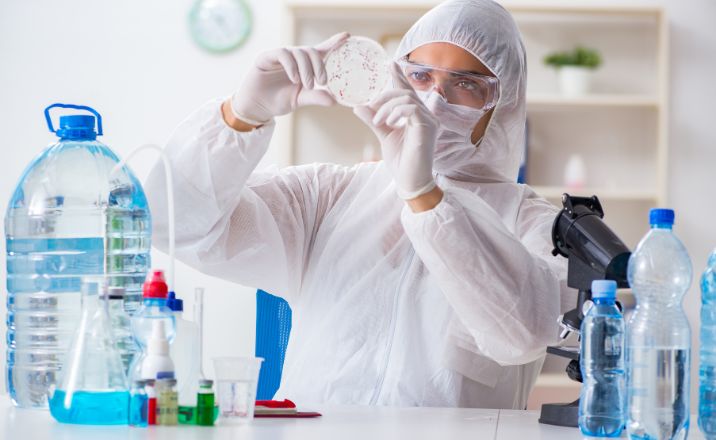
When you turn on the tap, you expect the water flowing out to be clear, clean, and safe. But have you ever wondered how we actually know? The crisp, refreshing glass of water you enjoy is the result of a complex intersection of chemistry, biology, and environmental regulation. Behind every safe drop lies a rigorous scientific process designed to detect contaminants invisible to the naked eye.
Understanding the science behind water quality testing reveals the incredible precision required to safeguard our most vital resource.
Beyond the Visible: The Molecular Challenge
Water quality testing is not about looking for dirt; it is about identifying specific chemical or biological entities that could pose a risk to human health. Because many harmful substances—such as lead, arsenic, or specific bacteria—are odorless, colorless, and tasteless, we rely on advanced analytical chemistry and microbiology.
Laboratories utilize highly sensitive instruments to detect these substances at concentrations as low as parts per billion (ppb). To achieve this, labs follow standardized testing standards that ensure every sample is handled, processed, and analyzed with the same level of accuracy, regardless of where the water was collected.
The Analytical Toolkit: How Labs Identify Contaminants
To understand what is in your water, technicians must use different methods depending on the target analyte.
1. Chemical Analysis
When testing for inorganic chemicals like heavy metals, labs often use techniques such as Inductively Coupled Plasma (ICP) or atomic absorption. These instruments can “see” individual atoms of elements like lead or mercury by ionizing a sample and measuring the unique light signature each element emits. For organic compounds—such as pesticides or industrial solvents—technicians might use Gas Chromatography-Mass Spectrometry (GC/MS). This method separates complex mixtures into individual components to identify and quantify specific contaminants with high precision.
2. Biological Testing
Microbial contamination is a primary concern for drinking water safety. Laboratories check for “indicator organisms,” such as total coliform bacteria and E. coli. The science here involves culturing water samples in specialized growth media. If bacteria are present, they reproduce, creating visible colonies that scientists can count. More advanced molecular techniques, like PCR (polymerase chain reaction), can also be used to detect the specific genetic material of pathogens, providing faster results.
3. Physical Parameters
Physical tests measure the “character” of the water. This includes pH, which indicates how acidic or alkaline the water is—a crucial factor in preventing pipe corrosion. Turbidity testing uses light to measure the “cloudiness” of water caused by suspended particles. High turbidity is significant because it can shield harmful microorganisms from disinfection processes like chlorination.
The Importance of Rigorous Protocols
Testing is only as good as the process used to collect and handle the sample. You can find more information on the specific contaminants analyzed by professional labs to see how comprehensive these screenings are.
A laboratory’s role is defined by strict adherence to the following scientific principles:
- Sample Preservation: Chemicals and bacteria can change over time if not handled correctly. Samples must be collected in specific containers, often pre-treated with preservatives, and kept at controlled temperatures until analysis.
- Calibration: Instruments must be calibrated daily using “standards”—solutions with known concentrations of contaminants. This ensures that the instrument’s “eyes” are perfectly focused.
- Quality Control: Labs run “blanks” (pure water) and “spiked samples” (water with a known amount of a contaminant added) to prove that their equipment is detecting what it should and ignoring what it shouldn’t.
Why Local Oversight Matters
While the science is global, the application of water testing is profoundly local. Environmental factors—such as the age of local infrastructure, the geology of the area, and nearby industrial or agricultural activity—mean that every community’s water profile is unique.
If you are concerned about your drinking water, it is best to partner with experts who understand the nuances of your specific environment. Our dedicated team of professionals provides comprehensive laboratory services tailored to meet the needs of our clients. Whether you are managing a private well or evaluating a municipal source, we can guide you through the process of sampling and analysis.
Staying Informed and Protected
Understanding the science behind water quality testing can feel daunting, but you don’t need a chemistry degree to advocate for your own health. The most important step is simply knowing that water testing is a highly standardized, scientifically validated field.
If you are just getting started with testing, check out our FAQ section for straightforward answers to common questions about water safety and testing frequency. If you suspect an issue or are looking for routine testing to ensure your home’s water is meeting health standards, we encourage you to contact us to speak with an expert.
By combining modern analytical science with professional oversight, you can enjoy the peace of mind that comes from knowing exactly what is in your water. Science provides the facts, and informed testing provides the protection.
Further Reading
- US Environmental Protection Agency (EPA): National Primary Drinking Water Regulations
- World Health Organization (WHO): Guidelines for Drinking-water Quality